RAIL ENGINEERING
RAIL PARTS DESIGN AND FEA
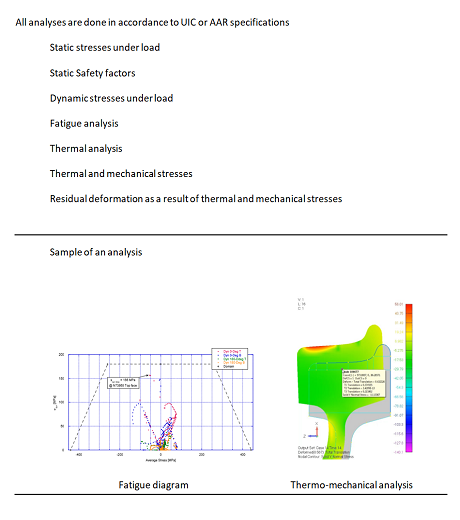
Rail components are critical for the rail infrastructure ensuring safety of transportation for freight and passenger trains. We provide a full thermo-mechanical FEA analysis of wheels in accordance to the UIC and EN or ARR related standards covering the following domains:

Wheel Analyses and Designs &
Wheelset Calculations and Designs
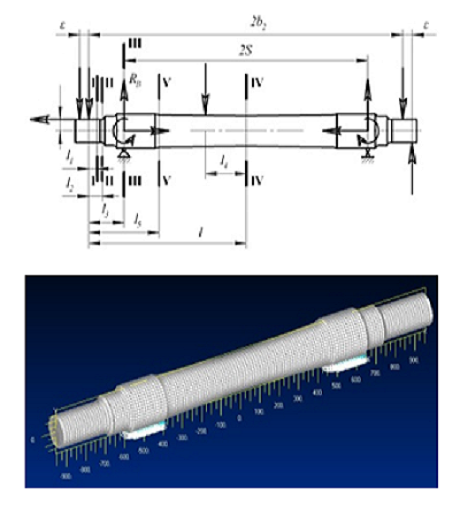
Axle Designs
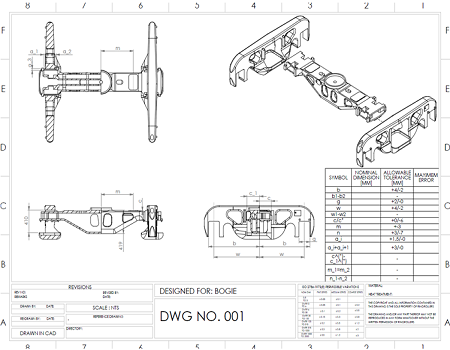
Frames and Bogie Designs and FEA
WHEEL OPTIMISATION - R&D
We have developed a unique analytical method to determine the optimal shape of a wheel web for the best mechanical response, as well as the best correlated heat transfer coefficients to reflect real temperatures during braking. This optimization methodology ensures the design provides the following benefits:
- Safety is maximised
- Life span of each wheel is elongated to 5 years under normal operating conditions
- Substantial revenue for the operator
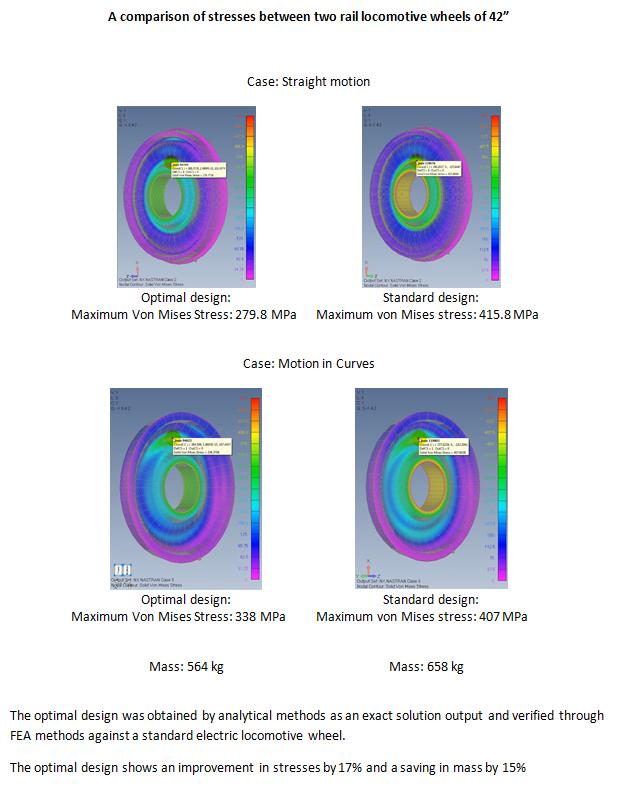
Figure 1 shows a comparison between two rail locomotive wheels of size 42”, between two cases of straight motion and motion in a curve. The optimal design relative to the standard design resulted in an improvement in stresses by 17% and a savings in mass by 15%.
FIGURE 1
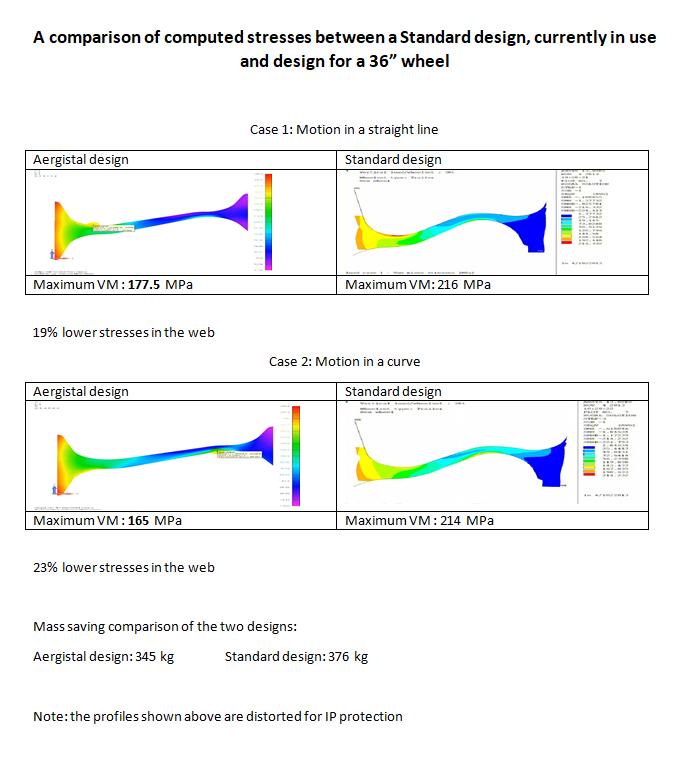
Figure 2 shows a comparison between two rail locomotive wheels of size 36”, between two cases of straight motion and motion in a curve. The optimal design relative to the standard design resulted in an improvement in stresses by 23% and a savings in mass by 9%.
FIGURE 2
BRAKING SYSTEMS
Advanced studies and research in rail braking systems
- Low braking temperature system for improved reliability of the wheel
- The temperature of the wheel rim may reach well over 400o C under prolonged braking. This can have catastrophic consequences for the wheel structural integrity. The new system ensures a temperature of around 200o C during prolonged braking
- Reliability and repeatability of the friction factor measurements of composite brakes
- Calibration of the rail dynamometer (Metpro/CBS)
Training
We provide in-depth courses on:
- Rail brakes: Theoretical calculations and design
- Phases of braking
- Dynamic reaction resulting from harmonic oscillations
- Train dynamics during braking
- Dry/Wet friction and rail adherence
- Pressure exerted by the wheels on rail tracks during braking